

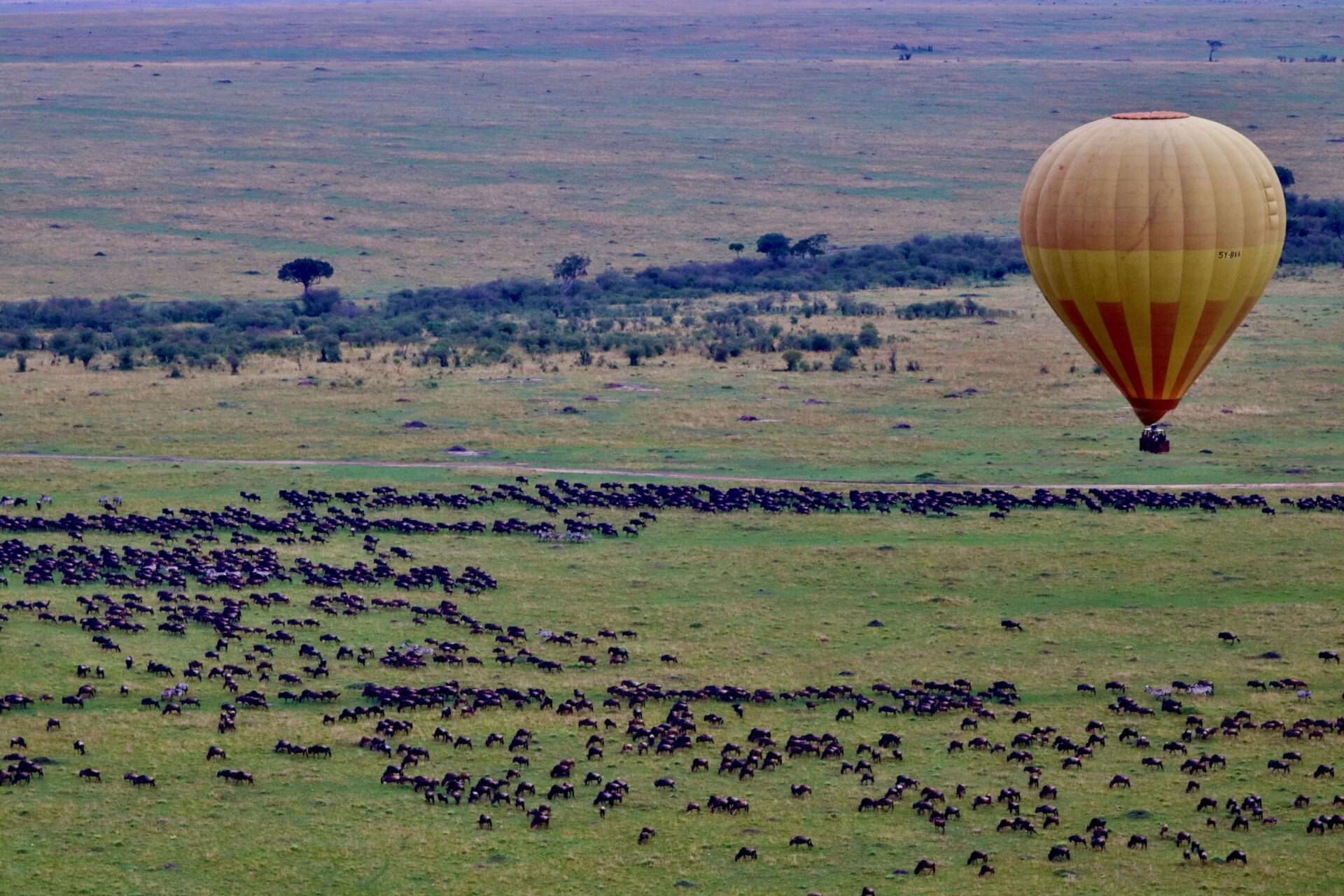
The Great Migration is one of the most breathtaking natural events in the world, as millions of wildebeest, zebras, and gazelles move through East Africa’s Serengeti and Masai Mara ecosystems. Stretching over 1,200 miles, this massive migration follows the rains and grasses, creating a rich cycle of life and survival. Experiencing the migration from Kenya and Tanzania offers a unique, unforgettable opportunity to witness nature at its rawest.
Experiencing the Great Migration in Tanzania’s Serengeti National Park
Tanzania’s Serengeti National Park is the starting point of the Great Migration which is a starting point in any luxury safari in Tanzania. Every year from December to March, herds of wildebeest gather in the southern plains of the Serengeti for calving season. This time of year, which marks the beginning of the cycle, is ideal for witnessing the young taking their first steps and seeing the herds in high concentration against the lush, green landscape. The Serengeti offers a unique view of the migration’s early days, where predators such as lions, hyenas, and cheetahs lurk, taking advantage of the newborn calves.
The endless plains of the Serengeti are ideal for spotting wildlife against the horizon, making for spectacular photo opportunities. If you’re after a truly immersive experience, consider a hot air balloon safari at dawn. Floating above the plains allows you to appreciate the enormity of the migration and observe wildlife interactions from a unique perspective. Serengeti’s lodges and camps offer a range of accommodations, from luxury lodges to mobile camps that move with the herds, ensuring guests remain close to the action.
Witnessing the Migration Crossings in Kenya’s Masai Mara
From July to October, the herds make their way northward into Kenya’s Masai Mara, where they face one of the most challenging parts of the journey: crossing the Mara River. Known for its dramatic scenes, the river crossings are a highlight of the Great Migration, showcasing the bravery and survival instincts of the animals. The sight of thousands of wildebeest leaping into crocodile-filled waters, with predators waiting along the banks, is both heart-stopping and awe-inspiring.
Kenya’s Masai Mara offers excellent vantage points for witnessing these crossings, and local guides have extensive knowledge about predicting the herds’ movements. Several luxury lodges and tented camps along the river provide close proximity to the action. To enhance the experience, book a safari with an experienced guide who can help you track the animals’ movements and understand the behavior of the herds as they navigate this perilous part of their journey.
Planning the Ultimate Great Migration Safari Experience
When planning a Great Migration safari, timing and location are key. The migration doesn’t follow a strict calendar, as it’s largely dictated by rainfall patterns, so planning flexibility is essential. For the calving season in Tanzania’s Serengeti, visiting between January and March is ideal. For the river crossings in Kenya’s Masai Mara, aim for July through October when the herds are most likely to reach the Mara River.
Both Kenya and Tanzania have well-developed safari infrastructures with options ranging from luxurious lodges to eco-friendly mobile camps that follow the herds. Guided tours with expert rangers and wildlife specialists offer in-depth insights and enhance the overall experience. Whether witnessing newborn calves in the Serengeti or dramatic river crossings in the Masai Mara, the Great Migration showcases the endurance of Africa’s wildlife in one of nature’s most remarkable spectacles.
Embarking on a journey to witness the Great Migration is not just a safari; it’s a passage through one of the most extraordinary natural events on Earth.