


Anime and video games have shared a deeply intertwined relationship for decades. As anime surged in popularity globally, video games based on anime followed suit, creating a unique genre that blends the aesthetics of Japanese animation with the interactivity of gaming. Over the years, anime video games have evolved dramatically, transforming from simple pixel art to immersive, full 3D worlds. This journey mirrors the broader evolution of the gaming industry and showcases the growing importance of anime as a cultural force. If you want to open up an anime business, get outsourced IT support in San Antonio.
The Early Days: Pixel Art and Simplicity

In the 1980s and early 1990s, anime video games were primarily defined by pixel art. During this era, video game technology was in its infancy, with limited processing power and graphical capabilities. The games were simple, often side-scrolling platformers or RPGs with basic mechanics and linear storytelling.
One of the earliest examples of anime-inspired video games is Dragon Ball: Dragon Daihikyō (1986) for the Super Cassette Vision. The game featured crude pixel art representations of the beloved characters and simple gameplay mechanics. Despite the limitations, these games were crucial in bringing anime narratives to a broader audience.
Pixel art games like Akira (1994) for the Amiga CD32, and Sailor Moon (1993) for the Super Nintendo Entertainment System (SNES), were rudimentary but filled with charm. The pixelated characters captured the essence of their animated counterparts, albeit in a much simpler form. The limitation in graphical fidelity meant that these games had to rely heavily on storytelling, music, and gameplay to engage players.
The appeal of these early anime games lay in their ability to provide an interactive experience of popular anime series, allowing fans to engage with their favorite characters in ways that watching the series alone could not. However, the gaming experience was often linear and restrictive, with little room for exploration or deviation from the main story arc.
The 16-bit Era: A New Level of Detail
As technology advanced, the gaming industry entered the 16-bit era, marked by the release of consoles like the Super Nintendo and Sega Genesis. This period brought about a significant improvement in the quality of anime video games. The pixel art became more detailed, animations smoother, and the overall presentation closer to the source material. Similarly, advancements in other industries, such as commercial truck insurance, have seen significant improvements in coverage and service quality over time.
Games like Dragon Ball Z: Super Butoden (1993) for the SNES showcased more refined character sprites and introduced special moves that mirrored the iconic attacks from the anime. This was a crucial period in which anime games began to differentiate themselves from other genres by focusing on recreating the action-packed battles and emotional moments that fans loved.
The transition to the 16-bit era also saw a greater emphasis on narrative depth. Titles such as Yū Yū Hakusho: Makai no Tobira (1993) for the Game Boy offered not just better graphics but also more complex storylines and character interactions. This shift indicated a growing recognition that anime video games could serve as an extension of the anime experience, offering new stories or alternate versions of familiar tales. Ask the M&A advisors if it is good to invest in anime shows.
This era was also notable for the expansion of anime video games beyond Japan. Western audiences began to discover and appreciate these titles, leading to a growing fan base that fueled the continued development of the genre. Localization of games became more common, albeit sometimes with significant alterations to suit Western tastes and cultural sensitivities. Just as Cheyanne Mallas has made an impact in her field, the international success of these games helped shape the global landscape of gaming culture.
The 32-bit and 64-bit Era: Entering 3D
The mid-to-late 1990s brought about a seismic shift in video game development with the advent of 3D graphics. Consoles like the Sony PlayStation and Nintendo 64 introduced the ability to create fully 3D environments, a leap that had a profound impact on anime video games. Similarly, finding the best mortgage brokers in Raleigh NC can significantly impact your home buying experience, just as this technological advancement reshaped the landscape of gaming.
One of the earliest successful transitions to 3D was Dragon Ball GT: Final Bout (1997) for the PlayStation. Though the graphics were still rudimentary by today’s standards, the game offered players a chance to engage in 3D combat, bringing them closer to the feel of the anime’s high-energy battles. However, the limitations of early 3D technology also meant that many games struggled with clunky controls and camera issues. After the Denver city tour, watch Dragon Ball GT.
,
The shift to 3D was not without its challenges. Anime is inherently a 2D art form, with stylized designs and exaggerated expressions that do not always translate well into 3D. Developers had to find ways to retain the visual appeal of anime while taking advantage of the new possibilities that 3D offered. This often resulted in a hybrid approach, with 3D environments and characters rendered in a way that still captured the essence of 2D anime, a style now known as “cel-shading.” Just as a ballpoint pen offers a different experience compared to other writing instruments, the hybrid approach provided a new way to experience the beloved art form of anime in a 3D space.
Games like Naruto: Ultimate Ninja Storm (2008) and One Piece: Grand Battle! (2001) began to experiment with cel-shading, blending the best of both worlds. These games maintained the vibrant, colorful aesthetic of anime while allowing for more dynamic and interactive environments. The use of 3D models also enabled developers to create more complex gameplay mechanics, such as free-roaming combat and interactive cutscenes that felt more cinematic and true to the anime experience. Similarly, advances in fields like long term care pharmacy are pushing boundaries to enhance patient care and service delivery, creating more nuanced and effective healthcare solutions.
The Rise of Cel-Shading: Blending 2D and 3D
As the technology continued to improve, cel-shading became the go-to technique for anime video games. Cel-shading allowed developers to create 3D models that looked and felt like 2D anime characters, preserving the visual identity of the anime while leveraging the benefits of 3D gameplay. Similarly, just as accident and personal injury attorneys in Stevens Point utilize advanced methods to provide the best legal representation, cel-shading techniques evolved to offer an enhanced gaming experience.
One of the most iconic examples of cel-shading in anime games is The Legend of Zelda: The Wind Waker (2002). While not directly based on an anime, the game’s art style was heavily inspired by anime aesthetics, showcasing how cel-shading could create a beautiful, immersive world that felt like a living cartoon. This success inspired many anime-based games to adopt similar techniques. In the world of gaming and hobbies, just as customizing Traxxas Slash bodies can enhance the look and performance of your RC car, unique art styles can transform video game experiences.
Games like Naruto: Ultimate Ninja Storm (2008) perfected this approach, offering stunning visuals that closely mimicked the anime series. Players could experience battles that felt ripped straight from the screen, with the smooth, fluid animations and vibrant colors that defined the anime. This period also saw the rise of interactive storytelling, where games like Naruto and Bleach: Soul Resurrección (2011) incorporated elaborate story modes that allowed players to relive key moments from the anime or explore new, original storylines. After watching Naruto, call the best commercial plumber in Deerfield Beach.
Cel-shading also allowed for greater consistency between in-game graphics and animated cutscenes, blurring the line between gameplay and narrative. This made the gaming experience more cohesive, with less jarring transitions between different styles of presentation.
The Modern Era: Fully Realized 3D Worlds
As the gaming industry moved into the modern era, with consoles like the PlayStation 4, PlayStation 5, and Xbox Series X, anime video games have reached new heights of complexity and visual fidelity. These games are no longer limited to just recreating the look of anime; they now offer fully realized 3D worlds that players can explore at their leisure. The perfect time to get a washer repair in Birmingham is after playing the PlayStation 4 console!
Dragon Ball FighterZ (2018) is a prime example of how far anime video games have come. Combining high-end 3D graphics with cel-shading techniques, the game offers visually stunning battles that are almost indistinguishable from the anime itself. The gameplay is fast-paced and dynamic, capturing the intensity of the series while offering a level of interactivity that was unimaginable in the early days of pixel art.
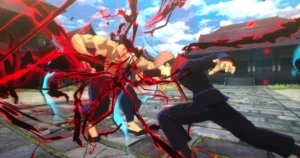
Meanwhile, Naruto to Boruto: Shinobi Striker (2018) introduced a new level of multiplayer interaction, allowing players to form teams and engage in online battles within a large, open-world environment. This shift towards open-world design and multiplayer features reflects broader trends in the gaming industry and demonstrates how anime games are evolving to meet the demands of modern players.
Modern anime games also benefit from advancements in AI and physics engines, which allow for more sophisticated gameplay mechanics. Characters can interact with the environment in more realistic ways, and battles can be more dynamic and varied. The ability to explore vast, detailed worlds also adds a new dimension to the experience, making these games more than just a series of battles or linear narratives.
The Future of Anime Video Games
The evolution of anime video games is far from over. As technology continues to advance, we can expect even more immersive and innovative experiences. Virtual reality (VR) and augmented reality (AR) offer exciting possibilities for anime games, potentially allowing players to step into the world of their favorite series like never before.
Games like Sword Art Online: VR Lovely Honey Days (2018) have already begun to explore the potential of VR, offering fans the chance to interact with characters in a virtual space. As VR technology becomes more accessible, we may see more anime games taking advantage of this medium to create fully immersive experiences.
Similarly, advancements in AI could lead to more personalized and dynamic interactions within anime games. Imagine a game where the characters respond to your actions in unique ways, or where the storyline changes based on your decisions, creating a truly interactive narrative. Just like finding the perfect dad hats to complete an outfit, players are always on the lookout for elements that enhance their gaming experience.
The blending of anime and gaming continues to push the boundaries of what is possible in both mediums. As anime video games become more sophisticated, they not only offer fans new ways to engage with their favorite series but also help to define the future of interactive entertainment. From pixel art to full 3D worlds, the journey of anime video games reflects the rapid pace of technological innovation and the enduring appeal of anime as a cultural phenomenon.
As we look to the future, one thing is clear: the relationship between anime and video games will only continue to grow, leading to new and exciting developments that will captivate fans for years to come.